Cavapoo Grooming: Soft Coats and Manageable Pet Trims
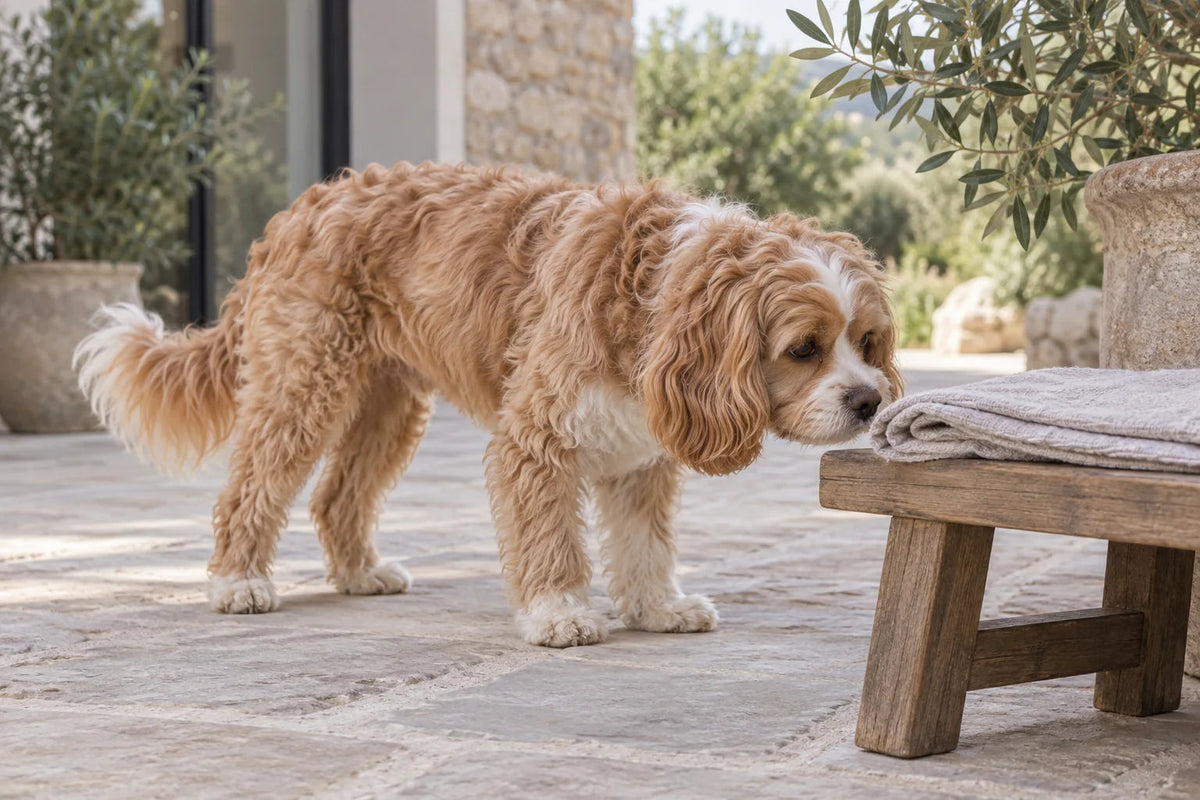
A Cavapoo’s soft face can make its grooming needs look deceptively simple. A small dog still has a whole coat to check, and soft hair behind the ears or under a harness can tangle long before the back looks untidy.
Cavapoos, also called Cavoodles, are Cavalier King Charles Spaniel–Poodle crossbreeds. Their hair can vary, so the best routine begins with your dog’s actual texture and retained length rather than a single rule for every crossbreed.
Keep the familiar soft look without keeping unmanageable length. A practical body trim, clear face and comfortable ear furnishings can be a better everyday choice than a photograph-perfect style you cannot maintain.
Match the brush to the hair
PetMD’s reviewed Cavapoo guide explains that brush choice depends on the coat inherited: curlier hair may suit a small slicker, while straighter hair may suit a pin brush. It also recommends regular brushing and grooming appointments. Use those as a starting point, then check whether your individual routine keeps the roots clear.
A wavy coat is not automatically easy, and a curly coat is not identical to a Poodle’s. Part the hair at the shoulder, behind an ear and under a front leg. Ask a groomer to demonstrate the pressure and brush reach appropriate for those different areas.
Teach the handling before demanding a haircut
Start with short sessions on a stable non-slip surface. Let your dog investigate a brush, reward calm contact and practise briefly touching the feet and lifting an ear to look beneath the hair. Do not try to complete every task on the first attempt.
Support a small dog securely without forcing its joints into awkward positions. If you use a table, remain beside it throughout. Repeated pulling away is a reason to pause and adjust the session, not a cue to restrain harder and hurry.
Make early grooming introductions about familiarity. Waiting until the coat urgently needs a major cut means the dog has to cope with unfamiliar handling and a difficult coat at the same time.
The comb check that catches what a brush misses
- Lift a narrow layer. Work underneath the surface hair.
- Brush with light strokes. Move through a small manageable section rather than repeatedly sweeping the whole body.
- Ease loose tangles from the ends. Support the hair near its base. A suitable dog detangling spray can help when used as directed.
- Follow with a comb. Wider spacing comes first; the comb should pass without pulling the skin.
- Check friction areas. Include ear bases, harness contact, armpits, legs and the tail area.
The VUNRO coarse-and-fine comb is a useful size for checking small sections. It should confirm that hair is clear, not be forced through a mat. If hair forms a tight pad or handling becomes uncomfortable, stop and ask a groomer to assess it. Never slide scissors under a close knot.
Pay attention to the face without overdoing it
After meals and drinks, gently wipe ordinary residue from the muzzle and dry the hair. Check that longer hair is not trailing into the eyes or mouth. A groomer can keep the face practical while retaining the soft Cavapoo expression.
Do not chase staining with household chemicals or aggressive rubbing. Keep routine cleaning on the outside; do not insert tools into the ears or treat hair removal inside them as an automatic grooming job. This guide concerns ordinary coat care, so unusual soreness or persistent irritation needs appropriate professional assessment rather than a new grooming product.
Prepare the whole bath and drying session
A bath is easier when the supplies, towels and drying space are ready first. Check the coat before wetting it and gently clear loose tangles. Have extensive matting assessed before an ordinary bath.
Use lukewarm water and dog shampoo according to its instructions, with a non-slip surface beneath the dog. Work gently through the hair, rinse thoroughly and protect the eyes and ears. Blot with towels instead of rubbing the coat into tangles.
If using a dryer, introduce comfortable moving airflow gradually. Check underneath the legs as well as over the back. Before clipping, the hair needs to be completely dry and combable. Our coat preparation guide shows how to assess that endpoint.
Choose a haircut by its upkeep
Ask for a plan covering body, legs, ears and face. A short back does not remove the work of long fluffy legs or a full beard. Explain how much brushing you can do and which areas become tangled first.
Agree on the next appointment while the coat is comfortable. Regular checks between visits will tell you whether the interval works. If tangles return sooner, change the retained length or appointment spacing rather than letting discomfort become routine.
Owners trained in suitable body clipping can consider the VUNRO D-Series clipper, which takes D-Series blades. Attachment choice should suit the desired finish and prepared coat. Keep precision face work, sensitive areas and close matting with an experienced groomer.
Do not let fluffy feet hide the nails
Check nails and any dewclaws regularly, even when the foot hair looks neat. Introduce a nail tool separately from a long brushing session, and ask for a demonstration if you are unsure how much to remove safely. A calm check now is more useful than leaving every small task until the next haircut.
The best Cavapoo routine keeps hair easy to separate, everyday mess manageable and your dog comfortable being handled. That is a more useful goal than making every Cavapoo look the same.
Keep learning
More from the Blade Blog
Whippet Grooming: Gentle Coat Care and Comfortable Nails
Read the guide →
Chihuahua Grooming: Smooth Coats, Long Coats and Tiny Paws
Read the guide →