Yorkshire Terrier Grooming: Silky Hair and Practical Trims
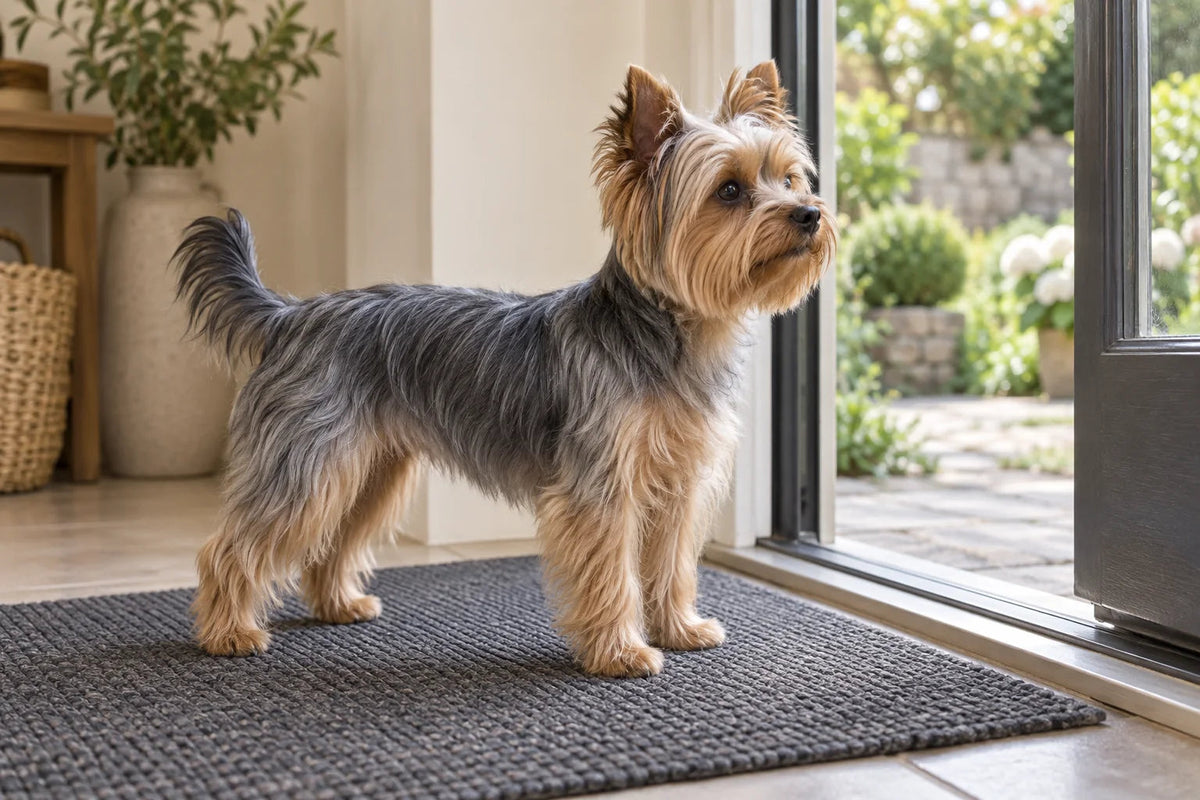
A Yorkshire Terrier does not need a floor-length coat to look like a Yorkie. That glossy, silky hair can be kept in a practical pet trim, but shortening it does not remove the need to check the roots, face and little friction points that collect tangles.
The useful question is not which haircut looks best in a photograph. It is which length lets your dog walk, eat, play and be brushed comfortably within the time you can realistically give to coat care.
Choose the maintenance routine before the haircut. Long silky hair needs frequent gentle attention. A shorter body with manageable leg and face hair can make everyday care easier without demanding a show-coat routine.
Understand the silky coat
The AKC breed profile describes the Yorkie’s long, silky coat and its regular grooming needs. Fine hair can tangle even when it feels smooth on top. Length trailing beneath the body also picks up grit, grass and moisture.
Judge the coat in separate areas. A clear back does not tell you whether the hair behind an ear, beneath a harness strap or between a front leg and the chest is still easy to comb. These smaller checks are especially useful on a dog whose entire coat can look tidy from standing height.
A five-area daily check
- Face: check that hair is clear of the eyes and that meal residue is not drying into the muzzle.
- Behind the ears: part the hair gently instead of brushing across the outside of a hidden knot.
- Harness contact: remove the harness after use and check where the straps rub.
- Legs and underside: look for damp or dirty hair and little tangles where the legs meet the body.
- Feet and tail area: remove loose outdoor debris and check that the retained hair stays clean.
This is an observation routine, not a demand to finish every grooming job in one sitting. If your dog becomes restless, stop at a comfortable point and return to a manageable section later. Keep a small dog secure on a non-slip surface and never leave it unattended on a table.
Brush the hair without pulling or breaking it
For longer hair, work in small layers with a suitable soft pin brush and follow with a metal comb. Lightly condition the hair with a dog coat product if its instructions call for that; soaking the coat in spray is not the aim. A brush should separate hair with gentle strokes, not scrape repeatedly at the skin.
- Lift a narrow layer so you can see where you are working.
- Support the hair close to its base while easing a loose tangle from the ends.
- Brush the cleared section gently, then pass the comb through it without forcing.
- Move to the next small area only when the first is comfortable.
If a knot is tight against the skin, stop. Do not slide scissors underneath it or try to pull a fine comb through by force. A groomer can assess how to remove it comfortably. Repeatedly struggling with the same areas is also a reason to discuss a shorter, more maintainable style.
A VUNRO coarse-and-fine comb can help check already loosened hair. Use the wider spacing first; the fine side is a finishing check, not a way to cut through a mat.
Bathing: protect the work you have already done
Check and gently brush the coat before a routine bath. If you find extensive or tight matting, ask a groomer to assess it before wetting the coat. Prepare towels, dog shampoo and a safe drying space first so you do not have to leave the dog while looking for supplies.
Use lukewarm water and follow the shampoo’s directions. Work with the direction of the hair rather than scrubbing it into a tangled pile. Rinse thoroughly, including the underside and legs. Keep product and water away from the eyes and avoid directing water into the ears.
Blot with a towel instead of vigorously rubbing. If using a dryer, introduce it gently and use comfortable, moving airflow; do not hold heat against one area. The roots must be dry before a haircut. A coat that feels dry across the back can still be damp beneath the legs.
Our coat preparation guide takes you through the full bath, dry and comb-check sequence.
Plan a haircut around ordinary life
The AKC’s Yorkie grooming guide distinguishes show preparation from pet care and discusses regular trimming. Use that distinction when speaking to your groomer: explain how often you can brush, how muddy the walks are and which areas become difficult first.
Ask for a clear plan for body length, leg furnishings and face hair rather than relying on the phrase “puppy cut,” which can mean different things. A beautifully short body will not solve daily work if the legs and beard are left much longer than you can maintain.
For owners already comfortable with clipper handling, the VUNRO D-Series clipper is an option for appropriate pet trimming on a clean, dry, combable coat. It uses D-Series blades. Discuss the finished length and suitable attachment with your groomer before starting; sensitive face, feet and skin folds are sensible areas to leave to a professional.
Keep the routine working between appointments
Check nails and any dewclaws regularly rather than assuming walks maintain them. Introduce paw handling calmly, and ask for a demonstration if you cannot identify a safe amount to remove. Wipe ordinary dirt from facial hair gently and keep long eye-area hair safely managed; do not use household stain removers near the face.
Before the next haircut, note where tangles first returned. That small piece of information helps your groomer adjust the length or your maintenance routine. A successful Yorkie trim is one your dog can comfortably wear for the whole interval between appointments.
Keep learning
More from the Blade Blog
Whippet Grooming: Gentle Coat Care and Comfortable Nails
Read the guide →
Chihuahua Grooming: Smooth Coats, Long Coats and Tiny Paws
Read the guide →